
 English
 中文简体
Understanding Ramie Material and Pineapple Fiber in Modern Textile Production
Natural bast and leaf fibers are re-entering technical textile supply chains as manufacturers look for renewable alternatives to synthetic yarns. Two of the most discussed options are ramie and pineapple fiber, both of which behave very differently from cotton or polyester once they reach the warping stage. Understanding these differences early in the planning process prevents costly downtime later, since fiber-specific tension settings and beam density control decisions made at the warping stage carry through every later step of fabric formation.
So what is ramie fabric exactly? Ramie material comes from the stalk of the Boehmeria nivea plant, a member of the nettle family cultivated primarily in East and Southeast Asia. After the outer bark is stripped away, the inner bast fibers are degummed to remove pectin and lignin, leaving long, fine, highly crystalline cellulose strands. The result is a fabric prized for exceptional tensile strength, natural luster, resistance to bacteria and mildew, and a crisp hand feel similar to linen but with less elasticity. That low elongation at break is the single most important fact a warping technician needs to know, because it changes how the yarn responds under draw and beam tension.
Pineapple fiber, sometimes called pina fiber, is extracted from the leaves of the pineapple plant rather than the fruit itself. The leaves are scraped to separate long, silky fibrils that are then washed, dried, and hand or machine combed into workable strands. Compared with ramie, pineapple fiber is finer in diameter, lighter in weight, and slightly more brittle, which means it tolerates less abrasion at the creel and guide rollers before fibrillation or breakage occurs. Both fibers are frequently blended with cotton, silk, or technical synthetics to balance strength, drape, and cost, which introduces additional complexity when multiple yarn types must be warped together at consistent tension.
Comparing Fiber Performance Across Four Material Types
Before selecting warping parameters, most production planners benchmark the target fiber against materials the mill already runs regularly. The radar chart below compares ramie, pineapple fiber, cotton, and polyester across five properties that most directly influence warping beam behavior: tensile strength, moisture absorption, biodegradability, dye uptake, and raw material cost efficiency. Ramie leads on strength and biodegradability but trails polyester on cost efficiency, while pineapple fiber sits closer to cotton on moisture absorption but ahead of both on biodegradability.
The practical takeaway is that ramie and pineapple fiber occupy a similar performance niche: high strength and low environmental footprint, but with narrower processing windows than conventional fibers. That narrower window is exactly why warping beam setup and split warping machine tension zones need to be configured with fiber-specific settings rather than default cotton profiles.
Why Warping Complex Yarn Structures Demands Tighter Tension Control
Warping complex yarn structures made from bast and leaf fibers is fundamentally different from warping cotton or filament polyester. Ramie yarn has very little stretch to absorb sudden tension spikes, so an uneven creel pull or a snagged guide can translate directly into broken ends rather than a temporary elongation that self-corrects. Pineapple fiber blends face the opposite risk profile: individual filaments are so fine that excessive tension causes fibrillation, where the outer fiber layers peel and roughen the yarn surface before it ever reaches the beam.
The horizontal bar chart below illustrates relative tension variance tolerance, meaning how much fluctuation in newtons of pull each fiber can absorb before quality defects appear. Lower values indicate a narrower, more sensitive operating window that requires closer monitoring during warping.
Because ramie and pineapple fiber both sit at the low end of this scale, mills typically run the warping beam at reduced surface speed and add extra dancer roller damping so that tension corrections happen gradually rather than in sharp steps. Creel tensioners are also set individually per bobbin position rather than in a single shared bank, which is where a split warping machine configuration becomes valuable rather than optional.
How a Split Warping Machine Handles Ramie and Pineapple Fiber Blends
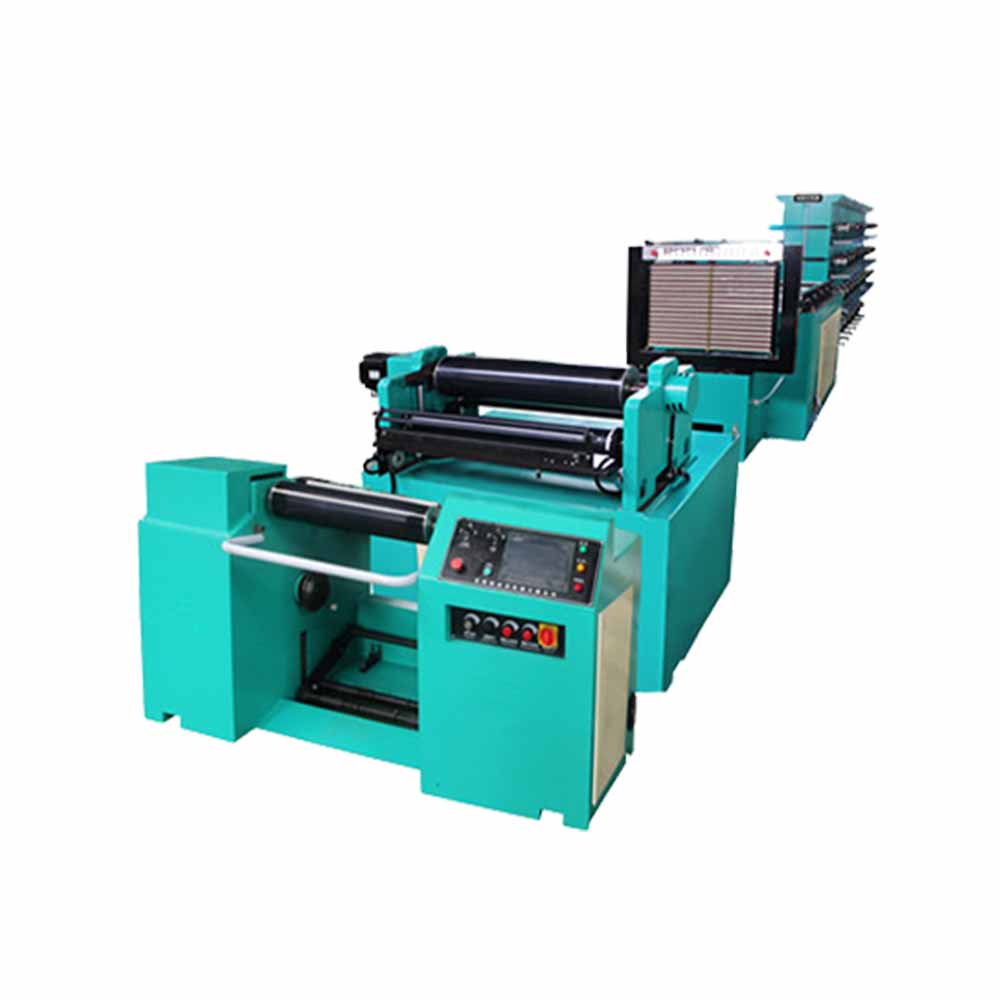
A split warping machine divides the creel into independently controlled tension zones for mixed-fiber sections.
A split warping machine divides a full warp width into two or more independently controlled sections, each with its own tension bank, let-off timing, and beam take-up. This matters for ramie and pineapple fiber production because these materials are rarely warped alone. A common construction pairs a ramie warp with a cotton or synthetic weft yarn, or blends pineapple fiber ends with silk in alternating stripes for a lighter drape. Running these dissimilar yarns through a single shared tension system forces a compromise setting that is too tight for one fiber and too loose for the other.
By splitting the creel into zones, operators can assign the low-elongation ramie ends a gentler, more gradual tension ramp while allowing a companion fiber in the adjacent zone to run at its own optimal pull. This zone independence also simplifies changeovers, since a section running a fragile pineapple fiber blend can be paused and rethreaded without disturbing the tension calibration on the rest of the warp.
The line chart below shows how recommended beam density, measured in ends per centimeter, shifts against machine speed for three fiber categories. Ramie and pineapple fiber both require a downward density adjustment as speed increases to prevent friction-induced fibrillation, while a conventional cotton blend tolerates a flatter curve.
A ten percent increase in warping speed on ramie ends typically requires a proportional reduction in beam density to hold end breakage below acceptable limits.
Warping Beam Design Considerations for Natural Technical Fibers

Flange diameter and barrel width on a warping beam govern how evenly ramie and pineapple fiber yarn packages build.
The warping beam itself is not a passive spool. Flange diameter, barrel width, and surface finish all interact with fiber characteristics to determine winding quality. Ramie yarn, with its stiff hand and tendency toward slight diameter irregularity along the strand, benefits from a wider barrel that spreads tension more evenly across the traverse. Pineapple fiber blends, being finer and lighter, are more sensitive to flange runout, since even minor lateral wobble at high beam rotation speed can cause edge ends to pile unevenly.
Beam surface finish matters as well. A slightly textured barrel surface helps grip low-elongation ramie ends during the initial wraps, preventing slippage that would otherwise loosen tension across the full package. For pineapple fiber, a smoother finish reduces the abrasive contact that leads to fibrillation at the point where yarn first touches the beam barrel.
The column chart below shows typical beam capacity in linear meters at a fixed barrel width, compared across three yarn counts for ramie and pineapple fiber blends. Finer yarn counts pack more length onto the same beam, but require closer density control to avoid crushing the outer layers under their own tension.
These capacity figures reinforce why beam density control cannot be a one-size-fits-all setting. A warping beam calibrated for coarse ramie at Ne 20 will underperform badly if the same density profile is applied to a fine Ne 40 pineapple fiber blend without adjustment.
The Full Preparation Sequence from Raw Fiber to Finished Beam
Warping is only one stage in a longer preparation sequence. The flowchart below outlines the typical path natural technical fibers follow before they reach the loom, highlighting where fiber-specific decisions must be made.
Each transition point in this sequence is an opportunity to correct or compound errors introduced earlier. If fiber blending ratios are inconsistent, no amount of warping beam density control will fully compensate. Conversely, a well-blended ramie and pineapple fiber yarn can still be ruined at the split warping machine stage if tension zones are not matched to the yarn's actual elongation profile rather than a generic natural fiber default.
Sustainability Comparison for Natural Fiber Warping Operations
Interest in ramie material and pineapple fiber is driven partly by performance and partly by sustainability positioning. Both fibers are grown as renewable crops, and pineapple fiber in particular is often extracted from leaves that would otherwise be agricultural waste after fruit harvest. The table below summarizes relative sustainability characteristics against cotton and polyester across four common evaluation criteria.
| Criteria | Ramie | Pineapple Fiber | Cotton | Polyester |
|---|---|---|---|---|
| Water Use in Cultivation | Low | Very Low | High | Not Applicable |
| Biodegradability | High | High | High | Very Low |
| Waste Stream Reuse Potential | Moderate | Very High | Low | Low |
| Processing Energy Demand | Moderate | Moderate | Moderate | High |
The very high waste stream reuse potential for pineapple fiber reflects its origin as a byproduct of existing agriculture, requiring no dedicated land use. When mills evaluate whether to add ramie or pineapple fiber lines, this sustainability profile often factors into procurement decisions alongside the technical warping considerations already discussed. A properly configured split warping machine and correctly specified warping beam density control turn these environmental advantages into commercially viable fabric rather than a niche experiment that generates excessive waste from broken ends.
Frequently Asked Questions
Q1: What is ramie fabric made from?
Ramie fabric is made from bast fibers extracted from the stalk of the Boehmeria nivea plant. After the fibers are degummed to remove natural gums and pectin, they are spun into yarn that is notably strong, lustrous, and resistant to bacteria and mildew, though it has low elasticity compared with cotton or wool.
Q2: How is pineapple fiber different from ramie material?
Pineapple fiber comes from the leaves of the pineapple plant rather than a stalk, and its filaments are typically finer and lighter than ramie. Ramie generally offers higher raw tensile strength, while pineapple fiber is prized for its silky hand and use as a byproduct of existing fruit agriculture.
Q3: Why does beam density need to change with machine speed for natural fibers?
Higher warping speed increases friction and mechanical stress on each yarn end. Because ramie and pineapple fiber both have limited elongation to absorb that stress, reducing beam density at higher speeds keeps individual ends from crowding together and rubbing against neighboring strands, which lowers the risk of fibrillation and breakage.
Q4: What advantage does a split warping machine offer for blended natural fiber warps?
A split warping machine allows different sections of the same warp to run under independently tuned tension settings. This is valuable when ramie or pineapple fiber ends are combined with a different companion yarn, since each material can be tensioned according to its own elongation and strength characteristics instead of a single compromise setting.
Q5: Can ramie and pineapple fiber be processed on standard warping equipment without modification?
Standard equipment can often run these fibers at reduced speed, but consistent quality generally requires adjusted tension profiles, a warping beam with appropriate barrel width and surface finish, and closer monitoring of end breakage rates compared with conventional cotton or synthetic yarn production.